Showing posts with label Web Design Method for Getting Ultimate Traffic. Show all posts

Saturday, August 17, 2013

One Best Trick for Blogger Optimization Strategies For Higher Search Results

One Best Trick for Blogger Optimization Strategies For Higher Search Results


This is called "Blogger/blogspot Title Swapping". Swapping sites title can help support your position in web index results page posting and likewise increment clickthroughs. From a SEO (Search Engine Optimization) view, page title is the most essential component in your site as far as standing admirably in web crawlers. Assuming that you take a gander at your browser's title bar you will recognize that Blogger's default models show your web journal title before every page or post title. So page title would typically be shown as:

search results, blogger seo, seo

After swapping the blog title, it will be appearing like this:

seo optimization, title swapping, blogger optimize
This kind of placement will be also appearing in google search results. The reason why you should put post titles at the beginning is because users are more likely to search for specific post content rather than the actual name of your blog. So having the post titles at the beginning increases your chances of being found.

How to optimize blogger post titles


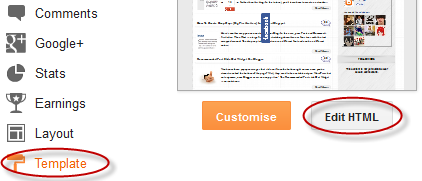
Step 1. Log in to your Blogger Dashboard and go to Template > Edit HTML


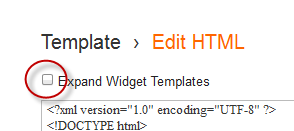
Step 2. Check the "Expand Widget Templates" checkbox


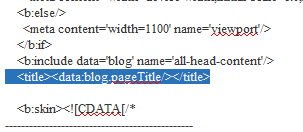
Step 3. Find (CTRL + F) this code:


<title><data:blog.pageTitle/></title>

 Step 4. Replace the code above with this one:

<b:if cond='data:blog.pageType == "item"'>
<title><data:blog.pageName/> |<data:blog.title/></title>
<b:else/>
<title><data:blog.pageTitle/></title> </b:if>

Step 5. Click Save Template and you are done.

Thursday, August 1, 2013

i Web Design by Easy Way, iWeb for Ur Mobile, iPhone, Android &Mac


Now the Web is on your digital phone. The i-Web service allows you to retrieve Internet content from your digital phone. Assuming that you're looking to construct a basic website, for yourself or your minor business, your new Mac makes it extremely simple with "iweb." It's even simpler provided that you have a .Mac record, in light of the fact that with one, you can distribute the website to the Internet with the click of a catch. Obviously, provided that you would prefer not to pay for .Mac i Web  or you recently have a site you'd get a kick out of the chance to redesign, its not exactly so evident how to distribute. In this article, you'll perceive how to fabricate your the website utilizing the iweb, and different approaches to distribute it. 


The fundamental thought with the iweb is that you begin with Apple planned patterns (which are top notch) and change them to your taste and needs. the iweb is flawless provided that you need to stay inside the handful of generally prominent the web page sorts that the patterns give you. Provided that you need a custom look and structure, you can do it, however you are not playing to the iweb's qualities and might meet some thwarted expectation with the breaking points of the system. 

One profit is that you can do everything by not knowing any HTML, yet you might as well know in light of the way Apple conceals the unpredictability of the websites inthe iweb, the destinations you make won't effectively decipher to other HTML altering programming down the line provided that you move on from the iweb. So on account of that, how about we begin… 

Building Your Site 

The iweb accompanies ilife '06 and ilife '08. Provided that you purchased your Mac at whatever time after January 2006, its very nearly a surety you have the  iweb on your machine. When you open the iweb, you'll be welcomed with a sheet asking you what "model" you might want to utilize. Pick the arrangement that is generally like how you need your site to look. Don't stress if there's something over it you don't prefer. iweb pages are just about totally customizable. 

When you have picked your pattern, you will see the web page, with some default pictures and message on it. This is the way generally Apple arrangements begin. They have a few placeholders in the outline and you are to displace the content and pictures with your own particular stuff. Only click inside the content to begin altering it. 

To change the pictures, click on the "Media" bind on the bottom toolbar. You'll discover that this media browser truly proves to be useful. You can drag any iphoto picture onto the default picture to trade it. In this design, the  iweb is pretty simple for those of you who need a great looking the website and don't worry about it being the careful pattern. At the same time for those that need their the website to be exceptional, there are bounty more alternatives. 

A standout amongst the most profitable choices in the web is the Insert menu. You can embed essentially anything. In the event that it isn't on the menu, simply click "Choose…" at the lowest part and pick any index. When picked, it will drop onto your webpage for resizing and impacts. 

Significantly more customization hails from the "Inspector" window. Down on the bottom bar with the media browser, this is the place all the propelled photograph and the webpage alternatives are. The distinctive tabs at the highest point of the Inspector window permit you to alter your content styles, picture embellishments, for example drop shadows and impressions, and to alter the program informative content for your  webpage. The "Adjust" bind permits you to alter your photograph exactly as though it were in iphoto, incorporating immersion, brilliance, and contrast. Investigate around the bottom column of catches for a tiny bit, and you'll have the iweb's energy at your fingertips. 

Getting Your Site Online 

Building the site is the simple part. Getting it online could be unreliable. In the event that you have .Mac, then it is truly simple. Only head off to the "File" menu and select "Publish to .Mac." If you don't have .Mac, its a bit harder. 

Thus, the first thing you must do is to pick where you will have your the webpage on the web. There are numerous free hosting choices, for example freewebs.com, and geocities.com. The downside to free hosting locales is that there is a restricted measure of space you need to transfer documents to, and its ordinarily low. Additionally, the website location is typically more drawn out, for the most part in the configuration of "webhost.com/youraccount" or "youraccount.webhost.com." There are approaches to get around this, however, which I will discuss later on. For a free host, I suggest Freewebs. Despite the fact that its inherent  the web page developer is bad, they offer to a great degree high index restricts for a free hosting the website. Additionally, they are promotion free. 

The following steps apply regardless of where you want to transfer your documents, be it to a free hosting site or your own particular yourname.com area. 

In the File menu, click "Publish to envelope." Follow the on screen bearings, making a point to both distribute to another or unfilled organizer and to sort in the precise address of your the website. For example, when I made my the website, I sorted in www.freewebs.com/adamfishercox since that is the page that individuals will visit to get to my homepage. 

When the iweb is carried out preparing, head off to the organizer it distributed to. You will recognize that there is an index.html record and a "Site" envelope. Inside the site organizer will be more html documents and other relating document organizers. The way the iweb pages are situated up, you should transfer the envelopes and indexes in the same request that they show up in the envelope on your PC. 

In this illustration, I will distribute to an organizer called "My Website." The "My Website" envelope relates to the fundamental envelope of my real online website. I will go online (I will utilize Freewebs) and transfer the "index.html" index from the "My Website" organizer on my machine to the principle envelope of my website. At that point I will make another envelope on my web space, called "Site," which will compare to the "Site" organizer in "My Website" organizer on my workstation. At that point I will go into the "Site" envelope and transfer all the records from my workstation's "Site" organizer, and make new envelopes all named literally the same things as the ones in the "Site" organizer on my machine. I will press on to transfer all the indexes to literally the same organizer and area on my web space as on my PC. When the greater part of the indexes are transferred, the site may as well work superbly b

Friday, July 26, 2013

WORK AT HOME OPPORTUNITIES JOBS


The point when individuals consider telecommuting, numerous envision resting in late, relaxing around in their night robe and long relaxed snacks. "In any case what individuals need to acknowledge is that in spite of the fact that telecommuting offers an incredible measure of adaptability, it is still an expert work and it ought to be treated as being what is indicated," says Holly Reisem Hanna, the originator of The Work at Home Woman, a recompense winning online journal committed to helping ladies and mothers satisfy their dreams of telecommuting or coming to be independently employed.

"People need to study best work at home polishes, such as setting available time, having a committed office space, evading home-bound preoccupations, and truly dressing as though you were heading off to an office," she says. "This will help keep your outlook sharp and centered."

I'm telecommuting today and its no simple accomplishment. I woke up, got dressed, controlled on my smart phone, and got to work—yet its once in a while troublesome to stay centered with such a large number of diversions and enticements around me. I just telecommute under extraordinary circumstances—perhaps five or six times each year—however some do it all the more as often as possible, and others work out of their homes forever. It's not for everybody, however, and some do it more efficaciously than others.

"I suppose it depends practically completely on the distinct," says Jenny Foss, a scout, profession mentor and author of the vocation site Jobjenny.com. "As somebody who made the transition–first to working low maintenance in an office and low maintenance at home, then afterward to being at home full time, and now, once again to a part schedule–i comprehend direct that telecommuting is much not the same as a nature's turf. The individuals who are set conform well to it, and be content with telecommuting, will be the individuals who are self-trained with their time, don't depend on up close and personal chitchat with colleagues for the duration of the day, and the individuals who are free in terms of authoritative issues that will perpetually spring up all through any given week."

Hanna concurs. "It truly relies on upon your temperament," she says. "I've discovered that to be an adequate work at home singular, you have to have superb basic considering, organizational and correspondence aptitudes, in addition to having the ability to shut out diversions."

As a home-based representative you don't have the richness of associates sitting right beside you–so you'll regularly need to resolve issues for yourself. In the event that you're the sort of individual who favors a mess of direction or is effortlessly diverted, working at home may not be a perfect scenario for you, Hanna includes. "Also regardless of the fact that you are persuaded and can stay on undertaking in a home office, in the event that you're a social butterfly that requires a great deal of social stimulation, working at home might make you become blend freaky or it make even make you socially discouraged." By knowing your nature and ability sets, you can verify if working at home is the right decision for you.

"Telecommuting furnishes you incredible chances to interface with some of your center qualities, for example family and neighborhood, while even now giving quality administration to your organization," says Shawn Mason Spence, a business person coach, radio host and creator of The Work From Home Bible (to be discharged November, 2012). "It requires discipline, center and duty, yet the adaptability to characterize that yourself. You can make a work society at home that speaks to you, not simply the society of your conglomeration."

Three of the most amazing profits of telecommuting are its adaptability, money related reserve funds and health favorable circumstances, Hanna says. Numerous folks revel in telecommuting since it permits them to docket their day around their family, which takes into consideration better work-life equalization and more quality time with their friends and family. Additionally, there are the special rewards of safeguarding cash on things like transportation, dry cleaning expenses, snacks consumed out and kid mind costs.

Different explanations representatives may need to telecommute: there's no drive, no manager approaching over your shoulder, no collaborators to intrude on you, and no clothing standard, says Lisa Kanarek, a home office master, creator and originator of Workingnaked.com. Anyway it might be troublesome to go from a corporate office to a home office on the grounds that there are no colleagues around, no backing staff and no IT division to help you, she says.

"It is regularly a test initially on account of the sudden absence of buzz that epitomizes a conventional the earth," says Lynn Taylor, a national working environment master and creator of Tame Your Terrible Office Tyrant. Anyway once you're on the telephone, occupied with your business, going to gatherings, utilizing videoconferencing and endeavoring to make your own particular business group, that segregation is regularly succeed, she says.

Hanna accepts a percentage of the most amazing tests that home-based specialists face are studying how to dodge diversions, managing social seclusion, and others not considering your work at home status important. "Fortunately, with a couple of minor conformity to your outlook and some legitimate conveyance with those around you, these can effectively be settled," she says.

Kanarek says assuming that you're not considered important, its essential to let loved ones realize that despite the fact that you're telecommuting, you're as of now living up to expectations. Furthermore provided that you're feeling bereft or unmotivated, work from a bistro or a restaurant a couple of hours a week. "While you may not cooperate with anybody, being around others can propel you to work," Kanarek says.

You may additionally have inconvenience drawing limits between your particular and business life, Taylor includes. You won't dependably have control, however by being parti

Sunday, July 14, 2013

STRATEGIES TO INCREASE WEB TRAFFIC


Site improvement (SEO) system and best practices change always as web crawlers like Google press on to take off new calculation overhauls, for example Panda and Penguin. The effect is that marks and advertisers can no more extended take alternate ways. It's all about building trust and driving quality site activity that will effect the end result. This originates from enhancing navigate rates for natural list items, which is the place the underutilized capacity of rich pieces becomes an integral factor.

A rich scrap is basically only a minor outline of the information that a client can hope to see on a website page. Rich pieces have no immediate impact on enhancing rankings, however they add huge worth to a natural posting in the web search tool results and can incredibly expand site activity. They can come in the manifestation of Google creator qualified data, appraisals and surveys, occasion notices and items.

Rich pieces enhance navigate rates breathtakingly by enhancing the manifestation of the posting, furnishing more qualified data to the client, and expanding land on the page for better perceptibility. They help confirm precisely what the client is searching for, so when they navigate to the page, they are more inclined to stay around. This diminishes bob rate and builds time on location.

Right away that we comprehend the profits, we should take a gander at the two generally impactful approaches to utilize rich pieces and how to kick off:

Google Authorship

A standout amongst the most notorious approaches to utilize a rich piece is through Author bits. This generally new characteristic permits clients to see the creator's name, Google+ profile picture, number of supporters and connections to additional substance the creator has made. Content showcasing is the new establishment for SEO. Visitor presents with connections again on your site are an incredible approach to enhance rankings.

Here are some modest steps to set up Google creation for visitor posting:

Setup a Google+ profile. A Google+ profile is an essential for Authorship markup. This is the way Google knows you are, truth be told, you, and not another person with the same name.

Connection to your Google+ profile from your visitor posts utilizing rel="author" tag. Ordinarily, you will need to set up a committing creator BIO page and incorporate the connection there. For sites that permit visitor posts, your creator BIO and Google+ connection will show up at the top or lowest part of every post.

Connection to the article from the Contributor area of your Google+ profile. Notwithstanding that you have the Google Authorship markup dialect in your bio on the visitor post, we need to finish the association. This is a basic methodology. Head off to your Google+ profile and alter the donor area to incorporate the url of the online journal where the visitor post is almost always distributed.

Check the association with Google's Rich Snippet Testing Tool. Go your browser to the Google Rich Snippets testing instrument and data the url of your visitor post once it is distributed. The instrument will let you know if creation markup is available.

When everything is situated up legitimately, and you run a pivotal word hunt down your posts, the outcomes will show up as appeared.

Appraisals and audits

An additional successful approach to utilize rich pieces is for appraisals and surveys. The objective of an audit rich piece is to enhance the presence of the posting and give clients survey qualified data in the ballpark of a particular item or administration, for example the star rating --1 to 5 stars --and the name of reviewer(s).

 There are numerous diverse sorts of rich piece code you can have inside your HTML to showcase distinctive surveys. The most widely recognized, and most straightforward to setup is total voting, as demonstrated in the case above. This permits a client to vote on an item or administration giving a score, either out of 5 or 10.

WordPress has incredible plugins accessible to achieve this. These plugins will immediately create and redesign your rich bits code each time there is another audit. One of the better plugins to create rich scrap codes for your site pages is GD Star Rating. There are numerous plugins that all have the same practicality and produce the same rich scrap code.

Read more stories about: Google, Search motor enhancement, SEO, SEO tips, SEO devices


Friday, August 3, 2012

Search Marketing Tips For Yandex, Russia’s Top Search Engine

Globally, Russia is the eighth largest market of Internet users, and as we know, Google is playing second fiddle to Yandex, which is currently the main search engine in Russia with well over half of the market share.
Yandex makes hundreds of millions of dollars in revenue and provides a broad range of online services (email, free hosting, PPC advertising network (Yandex Direct), maps, news, weather, and dictionaries). Comscore ranked the web property first in Russia with 34.9 million unique visitors in August 2010, It is also the 25th site in the Alexa Top 100. What’s more, Yandex is the default search provider in the Russian version of Firefox.

Russian Language In Connection With SEO

If your company is turning eyes to the Russian market, you might be considering  making a Russian-language version of your website to attract more local customers. You could have built your SEO strategy based on your experience in the English-speaking Internet, but if you’re building content in Russian, you should know some basic facts about this language that could  influence your SEO strategies.
Most important of the Slavic languages and the fifth most spoken in the world, Russian is used by 275 million people worldwide. That’s quite a lot, and your SEO campaign should be focused on your target audience only.
What is more, Russian is a pretty complex language, with various grammatical phenomena to be conceived. So having a Russian-speaking expert in your SEO team or outsourcing this service is a good solution.

Yandex Ranking Factors

Yandex was designed to handle the semantics of the country’s linguistic system. It has its own algorithm for indexing and ranking websites called Snezhinsk. This algorithm is based on over 1,000 ranking factors, the most important ones being age, unique content and quality backlinks.
Quotation/Citation index
Similar to Google PageRank, Yandex uses its own metric – the Quotation Index (aka Citation Index) – to indicate the site’s trustworthiness, ranging from 0 to 150,000. Trusted, non-public websites in Yandex have values between 150 and 1,000, while leaders of the Yandex Catalogue in the media sector have values up to 20,000. In general, the higher the Quotation Index, the firmer your positions in the Russian site are.
The Quotation Index is determined by the number and quality of your site’s backlinks, with quality being influenced by relevance of the context, geographical location of the linking site and the Quotation Index of your incoming links.
Geo-targeting
Geography is a very important factor for Yandex. All the queries typed by the users in the searchbox are divided into geo-dependent and geo-independent ones.
For example, if someone would search Yandex for a [hairdresser’s] (a geo-dependent keyword) using a Moscow IP, the results will be for that region only. On the contrary, a general query, for instance [download movies], would show results from different regions.
Yandex determines geo-dependence statistically. For instance, the query [cargo transportation] is geo-dependent because according to the statistic it is often accompanied by a certain location. Up to 30 percent of all queries in Yandex are geo-dependent.

How To Check Your Site’s Region In Yandex

Yandex would automatically assign every indexed site with a geographical location according to the location-by-IP data, domain name, contact information (zip code, telephone number) and the content in general.
Currently, Yandex supports 19 regions and 1250 smaller locations – cities and towns. You can check the region your site has been assigned in the Yandex Webmaster section (the service is available in Russian only).

How To Check Your Site’s Positions In Yandex Regions

You can manually compare your site’s ranking for a particular keyword in different regions using Yandex Advanced Search. Type your target location in the region box, go through SERPs and find your site’s position. First choose the advanced search option:
Then type in your query and the region.
There is also a special region-comparing feature in Yandex Webmaster (registration needed). It allows matching the results in two different regions on one page. Convenient enough, this feature has a crucial drawback. It has only six huge regions on the list: Moscow, Saint Petersburg, Russia, Belarus, Kazakhstan, and Ukraine.
If you want to get the region comparison job done faster, you may use our free tool. It lets you check your site’s rankings in several (or all) Yandex regions at once; it also allows you to work with keywords in Russian while using an English interface.
Back to geotargeting -  as soon as Yandex crawls your site, it will be assigned with a particular region. If you’re ok with the region your site was assigned – lucky you! But sometimes Yandex gets it wrong and then you might have a hard time getting to rank in the region you want.

What If Your Site Was Assigned The Wrong Region?

In this case, you should request a region change from Yandex Webmaster by indicating a preferred region and providing a URL that proves relevance to that region.
If you have an office in Russia, you can specify its contact information to prove you’re doing business in there.

What If Your Site Should Be Associated With Several Regions?

You can choose up to 7 regions if your website is included in Yandex Catalogue (think DMOZ and Yahoo Directory). Being listed there will boost your Quotation Index and attract visitors.
There are two types of listings in Yandex Catalogue: free and paid (apparently paying raises your chances of inclusion). You can receive a paid listing in a matter of days. However, a site might be rejected due to bad quality. Yandex Catalogue editors are strict! Free listings are a matter of luck. You can apply and wait for several months.

What If You Don’t Want To Be Associated With Any Region?

If you don’t need regional ties, there’s an option for that in Yandex Webmaster.

Yandex Direct: PPC Options

Obviously, optimizing the Russian version of your site in Yandex will require building an efficient keyword list. When creating keyword lists for your American, German or French sites, you turn to Google and Bing for keyword suggestions. But what do you do in Russia?
Yandex has its own PPC service called Yandex Direct which is similar to Google AdWords and Bing’s AdCenter. Yandex PPC does allow phrase and exact match functionality.
Yandex Direct manages PPC campaigns, serving ads on a cost-per-click basis. You decide how much you pay for a click yourself. Minimal bid is 30 kopecks (about a cent), and a minimum order is 300 roubles (about 10 bucks).
Specifying regions for your ads is likely to increase the overall effectiveness of your ad campaign. You can either select several geographical regions or a single one in which you would like your ad to be displayed.
You can check estimated search volume for any keywords/phrases in any region using Yandex Wordstat. It provides keywords suggestions together with monthly search volumes. Unfortunately, you can only enter one seed keyword at a time, so the process of generating a keyword list will take a while.
Recently, Yandex has released an in-depth report on contextual advertising in Russia. The report covers three years, from summer 2007 to summer 2010. For the first six months of 2010, the market share of Yandex Direct was estimated at 75-80%. As of the summer of 2010, ads placed on websites via Yandex Direct were viewed by over 21 million users per day. The fastest growth is observed in Russia’s regions, much higher than in Moscow and Saint Petersburg.
As you see, Yandex is evolving, and it creates brilliant opportunities for running region-targeted campaigns for international companies in Russia and the former Soviet Union. Still find SEO in Russia challenging? Believe us, it’s worth a try!

Monday, July 23, 2012

Creat MOBILE APP with MOBILE

Is a DIY app creator right for you?
That depends on the type of app you want to build. If you’re looking to build a game app or an highly-custom app, then your best bet is to hire a developer who can take your blueprint and make it into a reality. However, if you want to build an app that allows your brand to penetrate the growing mobile space without spending tens of thousands of dollars, then an app creator is just what you need.
We power apps (as well as mobile websites) for thousands of brands and businesses around the world – like music artists, hotels, restaurants, sports, and even conferences – to help them connect with users on-the-go. With our self-service platform, you’ll be able to create and manage your own app or apps with ease.
Where to begin – What platform do you need?
First, you should decide what type of mobile presence best fits your brand or business, as well as budget. We offer three different platforms to meet your needs:
1) If you want a basic mobile presence without spending a pretty penny, then consider creating a Mobile Website, which pulls content from your website into a mobile-friendly site.
2) If you want an actual app where you have the ability to add content, pick or upload your own designs, and reach iPhone & Android users, then our iPhone/Android platform is your best choice. You’ll be able to show off and promote your brand, inform users, sell merchandise, and connect with fans who have downloaded your app.
3) We also offer the iPad platform, which is designed for those who want to showcase beautiful, engaging content on the iPad’s big screen and rich graphic interface.
What’s next – Start building your app! 
After you sign up for the platform or platforms of your choosing, you can get started building your app in the CMS! For a beautiful, engaging app, make sure to have hi-res graphics (ex: logo, header images, backgrounds, etc) and enough content (ex: videos, photos, music, news feeds, etc). It’s important to have a high quality app that your users will enjoy – and while app creators do the hard work for you, you
If you’re building an iPhone or iPad app, you should get an iOS Developer account (if you don’t have one already), which is necessary for when we submit your completed app to Apple for approval.
After you’re done? Start marketing your app! 
Once your mobile site is finished or your app approved by Apple and Google, you’ll need to promote it – the worst thing you can do is to create an app and leave it alone to fend for itself in the crowded and highly competitive app markets. Most likely, without promotion, your app won’t see many downloads. Luckily, promoting your app is easy.
1) Online ~ Announce your app on your social networks like Facebook, Twitter, and even YouTube to reach existing fans who would be excited to download your app. It’s not enough to post about your app only when it first launches, you should talk about your app on a continuous basis. Use your website to feature your app in an advertisement or include it as part of your social networks section.
2) Offline ~ Talk about your app wherever you are. If you’re a restaurant, hang up a poster of your app along with its unique QR code right next to your Yelp, Google Places or Foursquare sticker. If you’re a music artist, hang up promo materials around your tour venues. If you’re a merchant, bring your app to the storefront by offering exclusive discounts toward tangible items to customers who have downloaded your app. There are so many ways to utilize your app offline.
3) Inside your app ~ We offer marketing tools that promote your app from within. Tools like Promo Popups, Photo Cards, Push Notifications, and Share to Unlock promote user activity while increasing the number of shares to other social network sites. Your users are your best brand advocates, so give them reasons to share your app with their friends.
If fans aren’t downloading your app, they either 1) Don’t have an iOS or Android device; 2) Don’t know that your app exists; or 3) Don’t understand the benefits of downloading your app. For reason #1, that’s not something that you can directly change – time is required for that; however, you can play an active part in spreading the word and letting your fans know the benefits of downloading your app.
Remember, your app is a part of your mobile strategy which requires attention and effort to be successful. Update content on a regular basis, find ways to further engage your existing users, and be proactive in gaining new users. Doing these things will help increase user activity and downloads.

CREAT MOBILE WEBSITE FOR BUSINESS

How do you make your businesses website ready for mobile users?

More and more people are starting to access the internet from their mobile phone, and analyst Morgan Stanley estimates that if smartphone sales continue at their current pace, then the number of users accessing the internet on a phone will exceed desktop internet users by 2015.
While most smartphones can access the internet the experience they get is less than perfect, as most websites just aren't designed for mobile phones. By creating a mobile-friendly site, you won't just get access to more users: you'll also have a huge leap on your competitors.
Before you create a mobile website it's worth looking at why most websites are hard to access and use on a mobile. Sites designed for desktop users are huge.

Website size matters

Take the TechRadar site as an example, our front page has lots and lots of columns of information, which can be difficult to see and navigate, even on the best iPhone Apple can make. It's also 2.96Mb in size, which, on a fast 20Mbps broadband connection takes less than a second, but on a mobile, in an area with a poor connection it can take minutes to download.
Ideally, you'll want your mobile website to be quick to access, be simple to navigate and be organised in more mobile-friendly chunks.

Mobile site build strategies

There are several different strategies you can adopt for building a mobile website; start afresh and build a completely new website, or adapt your current site. For most businesses the latter option is best, it allows you to dip your toe in the water, and if it works then you can then move to a site that has a mobile strategy at its core.
The quickest way to construct a mobile site is to look at one of the many online mobile portal tools. These services allow you to create mobile sites in just a few minutes or a few hours or little cost.
The sites you build are either created from a selection of pre-defined mobile templates, or they allow you to create new mobile templates using drag and drop features.
With most of the mobile portal building sites, you create a basic mobile site either by specifying the functions you want or, in some cases, you drag and drop the features you want on to a dummy mobile screen.
The range of functions available can be limited - although most portal builders are adding new functions all the time, - but most allow you to create multiple pages and sections, add feedback forms, create links to social networks like Twitter and Facebook, and have some sort of analytics to tell you where your customers came from.
Here's just a small selection of the current tools for creating a mobile website.

Wapple http://www.wapple.net

Wappledescribes itself as "the most advanced mobile web build, development and publishing technology" and it's not an idle boast. With Wapple you can create very sophisticated mobile websites and have them up and running very quickly.
There are two ways to develop with Wapple, you can either use the simple drag-and-drop controls which will get you a workable and well-designed site in less than 30 minutes. Or you can drill-down and tweak every element of a page and produce something very sophisticated.
Features include click-to-call, SEO functions, polls, questionnaires, a mobile shop, built-in forms, analytics, social media, video and Google maps integration.

mobiSiteGalore http://www.mobisitegalore.com

mobiSiteGalore has a huge selection of available features that you can draw on to create some very sophisticated mobile websites.
Features include widgets to do site search, add Google News and Sitemap, as well as creating click-to-call features, ecommerce features include the ability to accept Google checkout, PayPal or Bango payments, and design features include photo galleries through to adding audio and video clips.
mobiSiteGalore has a free limited trial service that allows you to setup a website with three pages and limited features and hosting, through to a professional pack with unlimited pages and features for just $225 a year.

MobilePress http://mobilepress.co.za

If your website is built using the WordPress content management service (CMS) then MobilePresswill get your business up and running very quickly.
MobilePress is a free WordPress plugin that will enable you to browse your WordPresswebsite on mobile handsets, with the ability to use customised themes.
Built into MobilePress is the ability to track your mobile sites analytics and serve ads from some of the biggest mobile ad networks such as Admob, Quattro Wireless, Buzzcity and InMobi. You can also serve you own managed ads.

Creating a mobile-friendly web page with Dreamweaver CS5.5

Acknowledging the rising popularity of smart phones and tablet computers, Adobe has begun to integrate the ability to create mobile content across its entire Creative Suite and Dreamweaver is no exception. One feature, which was introduced in Dreamweaver CS5 and improved in CS5.5, is support for CSS3 Media Queries.
Media Queries allow web designers to create style sheets based upon the screen size of the device used to view the page. It’s easier to understand by looking at an example:
@import url("tablet.css") only screen and (min-width:321px) and (max-width:768px);
For the query above the style sheet, tablet.css will be used only for devices with a screen width between 321 and 768 pixels. Larger and smaller devices will ignore tablet.css.
Simply stated, media queries make it possible for a web page to use separate style sheets for phones, tablets and desktops (and even screen sizes in between). My personal preference is to create a single style sheet for all devices and then use media queries to overwrite existing styles and create new, device-specific styles as needed. This also helps to avoid problems with older browsers that don’t support media queries.
I’ll work through a simple example. Once you understand the concept, you’ll be able to adapt more challenging designs for mobile use. I’m going to assume you have a basic understanding of Dreamweaver and HTML/CSS so I won’t be going into a lot of detail on the steps that aren’t directly related to creating media queries.

Site Setup

Note: Under Local Info in the Advanced Settings tab of the Site Setup dialog you will notice a field for Site-Wide Media Query file. Ignore it for now. It only works if you have an existing media query file that you want to use for your site.

Create and save a new HTML page.

For this example we’ll work with Dreamweaver’s built-in 2 column liquid, left sidebar, header and footer layout and save the CSS to a new file in a folder named css. Using a liquid layout is not necessary but will allow the layout to maximize screen usage at all sizes.

We’ll make 4 changes to the default layout:

  1. Change the .container width property to 90% to better use available screen width on small devices.
  2. Change the .container max-width property to 960px (This isn’t necessary but I don’t like reading very long lines of text).
  3. Change the .container min-width property to 760px. Note: Since we’ll be setting up rules for smaller screens, this would seem to be unnecessary but it’s useful for older browsers that don’t support media queries. The value of 760px will better accommodate the media queries we’ll be setting up.
  4. Add a 960px wide image to replace the image placeholder in the header.

Dynamically size an image

The header image creates our first challenge. This image will be too large to work with mobile devices. We’ll solve this issue by deleting the image height and width attributes from the html and sizing the image using CSS.
Property Inspector
Fig. 1: The Properties Inspector with image selected and the width and height attributes deleted.
  1. With the image selected delete the height and width attributes in the Properties Inspector (fig. 1 above).
  2. Next, in the twoColLiqLtHdr.css file, create a new style for the header image:
    .header img {
    width:100%;
    }
By removing the height and width attributes from the menu tag and using a percentage value in the CSS width property we cause the image to resize dynamically as the width of the page changes.

Add media queries and the device specific CSS files.

Media Queries dialog
Fig. 2: The Media Queries dialog
  1. Select the Insert>Media Queries menu item
  2. In the Media Queries dialog: (fig. 2 above)
    1. Under Write media queries to click to choose the Site-wide media queries file option (you can choose to save the queries to the current document but saving them to an external file makes them available for all of your site’s files).
    2. Click the Specify button to create and save your media query file. I saved mine as media.css (you must save the media query file as a .css document) in the same css folder where I saved my main CSS file, twoColLiqLtHdr.css.
    3. Leave Force devices to report actual width checked.
    4. In the box below, click the Default Presets button in the lower-right corner. This will define three media queries (for desktops, tablets and phones) but you’ll still need to create and save a CSS file for each of the queries.
    5. Create the CSS files
    1. Select the Phone query from the list if it’s not already selected.
    2. Under Properties at the bottom of the dialog:
      1. Accept the defaults for Description and Min and Max Width.
      2. Choose the Create new file menu option and click the folder icon to create and save your phone-based CSS file. I chose to name my file simply phone.css and saved it in my css folder.
    3. Repeat the steps above to create CSS files for Tablets and Desktops (as you probably have figured out by now, I called mine tablet.css and desktop.css and saved them in my css folder). 
    4. Click OK to dismiss the Media Queries dialog.
Warning: Since we want the style rules in our media query files to overwrite style rules with the same names in the twoColLiqLtHdr.css file, the link to the media query file (media.css) MUST appear after the link to the main CSS file as shown below. It should happen that way by default but, if the order is reversed, you’ll need to fix it in the code.
<link href="css/twoColLiqLtHdr.css" rel="stylesheet" type="text/css">
<link href="css/media.css" rel="stylesheet" type="text/css">
Note: After you’ve played with Adobe’s default media queries for a while you may want to edit them or add more. You can do that at anytime by choosing the Modify>Media Queries… menu option.

The tablet.css file

Since the layout I chose was designed for larger screens, I’ll ignore the desktop.css for now and concentrate on tablets and phones.
Let’s begin with tablets. The first thing we need to change is the min-width property for our container div. It’s currently set to 760px in twoColLiqLtHdr.css. Since the tablet media query is used for screens from 321 to 768 pixels a value of 320 pixels would make more sense. Unfortunately the min-width property is not supported in Dreamweaver’s Rule Definition dialog so we’ll need to add the rule directly in the code of tablet.css.

Container width

Related files toolbar 
Fig. 3: Split View with tablet.css selected in the Related Files toolbar and displayed in the Code section of the Document window.
  1. Make sure you are working in Split View and click the tablet.css link in the Related Files list at the top of the Document window. The tablet.css file will be displayed on the left in the code portion of the Split window (fig. 3 above).
  2. Add this rule to the file:
    .container {
    min-width: 320px;
    }
You should be able to see the effect of this rule by switching to Live View and resizing the document window. Notice that the layout will now resize all the way down to 320px wide.
Tip: You can test your layout at various common screen sizes by selecting a size from the menu revealed by clicking on the down arrow at the right of the Multiscreen button in the Document Toolbar at the top of the Document window (fig. 4 below). You can also preview the layout at multiple screen resolutions simultaneously (Fig. 6) by clicking the Multiscreen button itself.

The Multiscreen menu
Fig. 4: Selecting a preview screen size from the Multiscreen menu.

Sidebar and menu width

Ignoring the problems with the phone layout for the moment we still have an issue with the tablet layout. On narrower screens the left sidebar and menu are very cramped. We can solve that by removing the sidebar float and making it full width:
.sidebar1 {
float: none;
width:100%;
}
Now the sidebar appears above the main content rather than to its left.

Nav button width

Full width the nav buttons are rather wide. We can arrange them in two columns by floating the list items left and setting their width to 50%:
ul.nav li {
float:left;
width:50%;
}

Content width

Finally, the width of the content div is 80%. We need it to fill the full width of our layout so we’ll add this final rule to tablet.css:
.content {
width: 100%;
}
Our finished tablet.css looks like this:
@charset "utf-8";
.container {
min-width: 320px;
}
.sidebar1 {
float: none;
width:100%;
}
ul.nav li {
float:left;
width:50%;
}
.content {
width: 100%;
}
And on a 480 pixel wide device our layout now looks like Fig. 5 below.

480px wide preview 
Fig. 5: The page previewed at 480 pixels wide showing the effects of the tablet.css style sheet.

The phone.css file

We need similar rules for phone.css with the a couple changes: The min-width of the layout will be 200px, which should accommodate even pretty dumb smart phones. And we’ll let the buttons be the full width of the layout. So our phone.css file will look like this:
@charset "utf-8";
.container {
min-width: 200px;
}
.sidebar1 {
float: none;
width:100%;
}
.content {
width: 100%;
}

The finished page

Multiscreen preview
Fig. 6: A multiscreen preview of the page showing the different layouts for phone, tablet and desktop devices.
Figure 6 shows the Multiscreen preview of our customized layout. With just a few simple style rules we’ve created a layout that comfortably accommodates mobile devices and still looks good on a desktop computer.
Of course if this was an actual project rather than a simple demo we’d probably want to customize headline sizes and other features for maximum readability on smaller screens but, now that you understand the basics of CSS media queries, that should be a snap.
Good luck creating your own mobile friendly site. If you’d like to experiment with a more elaborate project you can download my free Dreamweaver Multiscreen template. And, if you have any questions about this tutorial, ask them in the Dreamweaver Club forum and I’ll be sure to follow up.

Friday, July 13, 2012

Top 10 Way to MAKE WEBSITE TRAFFIC and BLOG TRAFFIC

Increase Web TrafficIt's easy to build a blog, but hard to build a successful blog with significant traffic. Over the years, we've grown the Moz blog to nearly a million visits each month and helped lots of other blogs, too. I launched a personal blog late last year and was amazed to see how quickly it gained thousands of visits to each post. There's an art to increasing a blog's traffic, and given that we seem to have stumbled on some of that knowledge, I felt it compulsory to give back by sharing what we've observed.
 
NOTE: This post replaces a popular one I wrote on the same topic in 2009. This post is intended to be useful to all forms of bloggers - independent folks, those seeking to monetize, and marketing professionals working an in-house blog from tiny startups to huge companies. Not all of the tactics will work for everyone, but at least some of these should be applicable and useful.

#1 - Target Your Content to an Audience Likely to Share

When strategizing about who you're writing for, consider that audience's ability to help spread the word. Some readers will naturally be more or less active in evangelizing the work you do, but particular communities, topics, writing styles and content types regularly play better than others on the web. For example, great infographics that strike a chord , beautiful videos that tell a story  and remarkable collections of facts that challenge common assumptions  are all targeted at audiences likely to share (geeks with facial hair, those interested in weight loss and those with political thoughts about macroeconomics respectively).
A Blog's Target Audience


If you can identify groups that have high concentrations of the blue and orange circles in the diagram above, you dramatically improve the chances of reaching larger audiences and growing your traffic numbers. Targeting blog content at less-share-likely groups may not be a terrible decision (particularly if that's where you passion or your target audience lies), but it will decrease the propensity for your blog's work to spread like wildfire across the web.

#2 - Participate in the Communities Where Your Audience Already Gathers

Advertisers on Madison Avenue have spent billions researching and determining where consumers with various characteristics gather and what they spend their time doing so they can better target their messages. They do it because reaching a group of 65+ year old women with commercials for extreme sports equipment is known to be a waste of money, while reaching an 18-30 year old male demographic that attends rock-climbing gyms is likely to have a much higher ROI.
Thankfully, you don't need to spend a dime to figure out where a large portion of your audience can be found on the web. In fact, you probably already know a few blogs, forums, websites and social media communities where discussions and content are being posted on your topic (and if you don't a Google search will take you much of the way). From that list, you can do some easy expansion using a web-based tool like Double Click's Ad Planner:
Sites Also Visited via DoubleClick

Once you've determined the communities where your soon-to-be-readers gather, you can start participating. Create an account, read what others have written and don't jump in the conversation until you've got a good feel for what's appropriate and what's not. I've written a post here about rules for comment marketing, and all of them apply. Be a good web citizen and you'll be rewarded with traffic, trust and fans. Link-drop, spam or troll and you'll get a quick boot, or worse, a reputation as a blogger no one wants to associate with.

#3 - Make Your Blog's Content SEO-Friendly

Search engines are a massive opportunity for traffic, yet many bloggers ignore this channel for a variety of reasons that usually have more to do with fear and misunderstanding than true problems. As I've written before, "SEO, when done right, should never interfere with great writing." In 2011, Google received over 3 billion daily searches from around the world, and that number is only growing:
Daily Google Searches 2004-2011


Taking advantage of this massive traffic opportunity is of tremendous value to bloggers, who often find that much of the business side of blogging, from inquiries for advertising to guest posting opportunities to press and discovery by major media entities comes via search.
SEO for blogs is both simple and easy to set up, particularly if you're using an SEO-friendly platform like Wordpress, Drupal or Joomla. For more information on how to execute on great SEO for blogs, check out the following resources:
Don't let bad press or poor experiences with spammers (spam is not SEO) taint the amazing power and valuable contributions SEO can make to your blog's traffic and overall success. 20% of the effort and tactics to make your content optimized for search engines will yield 80% of the value possible; embrace it and thousands of visitors seeking exactly what you've posted will be the reward.

#4 - Use Twitter, Facebook and Google+ to Share Your Posts & Find New Connections

Twitter just topped 465 million registered accounts. Facebook has over 850 million active users. Google+ has nearly 100 million. LinkedIn is over 130 million. Together, these networks are attracting vast amounts of time and interest from Internet users around the world, and those that participate on these services fit into the "content distributors" description above, meaning they're likely to help spread the word about your blog.
Leveraging these networks to attract traffic requires patience, study, attention to changes by the social sites and consideration in what content to share and how to do it. My advice is to use the following process:
  • If you haven't already, register a personal account and a brand account at each of the following - Twitter, Facebook, Google+ and LinkedIn (those links will take you directly to the registration pages for brand pages). For example, my friend Dharmesh has a personal account for Twitter and a brand account for OnStartups (one of his blog projects). He also maintains brand pages on Facebook, LinkedIn and Google+.
  • Fill out each of those profiles to the fullest possible extent - use photos, write compelling descriptions and make each one as useful and credible as possible. Research shows that profiles with more information have a significant correlation with more successful accounts (and there's a lot of common sense here, too, given that spammy profiles frequently feature little to no profile work).
  • Connect with users on those sites with whom you already share a personal or professional relationships, and start following industry luminaries, influencers and connectors. Services like FollowerWonk and FindPeopleonPlus can be incredible for this:
Followerwonk Search for "Seattle Chef"

  • Start sharing content - your own blog posts, those of peers in your industry who've impressed you and anything that you feel has a chance to go "viral" and earn sharing from others.
  • Interact with the community - use hash tags, searches and those you follow to find interesting conversations and content and jump in! Social networks are amazing environment for building a brand, familiarizing yourself with a topic and the people around it, and earning the trust of others through high quality, authentic participation and sharing
If you consistently employ a strategy of participation, share great stuff and make a positive, memorable impression on those who see your interactions on these sites, your followers and fans will grow and your ability to drive traffic back to your blog by sharing content will be tremendous. For many bloggers, social media is the single largest source of traffic, particularly in the early months after launch, when SEO is a less consistent driver.

#5 - Install Analytics and Pay Attention to the Results

At the very least, I'd recommend most bloggers install Google Analytics (which is free), and watch to see where visits originate, which sources drive quality traffic and what others might be saying about you and your content when they link over. If you want to get more advanced, check out this post on 18 Steps to Successful Metrics and Marketing.
Here's a screenshot from the analytics of my wife's travel blog, the Everywhereist:
Traffic Sources to Everywhereist from Google Analytics


As you can see, there's all sorts of great insights to be gleaned by looking at where visits originate, analyzing how they were earned and trying to repeat the successes, focus on the high quality and high traffic sources and put less effort into marketing paths that may not be effective. In this example, it's pretty clear that Facebook and Twitter are both excellent channels. StumbleUpon sends a lot of traffic, but they don't stay very long (averaging only 36 seconds vs. the general average of 4 minutes!).
Employing analytics is critical to knowing where you're succeeding, and where you have more opportunity. Don't ignore it, or you'll be doomed to never learn from mistakes or execute on potential.

#6 - Add Graphics, Photos and Illustrations (with link-back licensing)

If you're someone who can produce graphics, take photos, illustrate or even just create funny doodles in MS Paint, you should leverage that talent on your blog. By uploading and hosting images (or using a third-party service like Flickr to embed your images with licensing requirements on that site), you create another traffic source for yourself via Image Search, and often massively improve the engagement and enjoyment of your visitors.
When using images, I highly recommend creating a way for others to use them on their own sites legally and with permission, but in such a way that benefits you as the content creator. For example, you could have a consistent notice under your images indicating that re-using is fine, but that those who do should link back to this post. You can also post that as a sidebar link, include it in your terms of use, or note it however you think will get the most adoption.
Some people will use your images without linking back, which sucks. However, you can find them by employing the Image Search function of "similar images," shown below:
Google's "Visually Similar" Search


Clicking the "similar" link on any given image will show you other images that Google thinks look alike, which can often uncover new sources of traffic. Just reach out and ask if you can get a link, nicely. Much of the time, you'll not only get your link, but make a valuable contact or new friend, too!

#7 - Conduct Keyword Research While Writing Your Posts

Not surprisingly, a big part of showing up in search engines is targeting the terms and phrases your audience are actually typing into a search engine. It's hard to know what these words will be unless you do some research, and luckily, there's a free tool from Google to help called the AdWords Keyword Tool.
Type some words at the top, hit search and AdWords will show you phrases that match the intent and/or terms you've employed. There's lots to play around with here, but watch out in particular for the "match types" options I've highlighted below:
Google AdWords Tool

When you choose "exact match" Ad-words will show you only the quantity of searches estimated for that precise phrase. If you use broad match, they'll include any search phrases that use related/similar words in a pattern they think could have overlap with your keyword intent (which can get pretty darn broad). "Phrase match" will give you only those phrases that include the word or words in your search - still fairly wide-ranging, but between "exact" and "broad."
When you're writing a blog post, keyword research is best utilized for the title and headline of the post. For example, if I wanted to write a post here on Moz about how to generate good ideas for bloggers, I might craft something that uses the phrase "blog post ideas" or "blogging ideas" near the front of my title and headline, as in "Blog Post Ideas for When You're Truly Stuck," or "Blogging Ideas that Will Help You Clear Writer's Block."
Optimizing a post to target a specific keyword isn't nearly as hard as it sounds. 80% of the value comes from merely using the phrase effectively in the title of the blog post, and writing high quality content about the subject. If you're interested in more, read Perfecting Keyword Targeting and On-Page Optimization (a slightly older resource, but just as relevant today as when it was written).

#8 - Frequently Reference Your Own Posts and Those of Others

The web was not made for static, text-only content! Readers appreciate links, as do other bloggers, site owners and even search engines. When you reference your own material in-context and in a way that's not manipulative (watch out for over-optimizing by linking to a category, post or page every time a phrase is used - this is almost certainly discounted by search engines and looks terrible to those who want to read your posts), you potentially draw visitors to your other content AND give search engines a nice signal about those previous posts.
Perhaps even more valuable is referencing the content of others. The biblical expression "give and ye shall receive," perfectly applies on the web. Other site owners will often receive Google Alerts or look through their incoming referrers (as I showed above in tip #5) to see who's talking about them and what they're saying. Linking out is a direct line to earning links, social mentions, friendly emails and new relationships with those you reference. In its early days, this tactic was one of the best ways we earned recognition and traffic with the SEOmoz blog and the power continues to this day.

#9 - Participate in Social Sharing Communities Like Reddit + StumbleUpon

The major social networking sites aren't alone in their power to send traffic to a blog. Social community sites like Reddit (which now receives more than 2 billion! with a "B"! views each month), StumbleUpon, Pinterest, Tumblr, Care2 (for nonprofits and causes), GoodReads (books), Ravelry (knitting), Newsvine (news/politics) and many, many more (Wikipedia maintains a decent, though not comprehensive list here).
Each of these sites have different rules, formats and ways of participating and sharing content. As with participation in blog or forum communities described above in tactic #2, you need to add value to these communities to see value back. Simply drive-by spamming or leaving your link won't get you very far, and could even cause a backlash. Instead, learn the ropes, engage authentically and you'll find that fans, links and traffic can develop.
These communities are also excellent sources of inspiration for posts on your blog. By observing what performs well and earns recognition, you can tailor your content to meet those guidelines and reap the rewards in visits and awareness. My top recommendation for most bloggers is to at least check whether there's an appropriate subreddit in which you should be participating. Subreddits and their search function can help with that.

#10 - Guest Blog (and Accept the Guest Posts of Others)

When you're first starting out, it can be tough to convince other bloggers to allow you to post on their sites OR have an audience large enough to inspire others to want to contribute to your site. This is when friends and professional connections are critical. When you don't have a compelling marketing message, leverage your relationships - find the folks who know you, like you and trust you and ask those who have blog to let you take a shot at authoring something, then ask them to return the favor.
Guest blogging is a fantastic way to spread your brand to new folks who've never seen your work before, and it can be useful in earning early links and references back to your site, which will drive direct traffic and help your search rankings (diverse, external links are a key part of how search engines rank sites and pages). Several recommendations for those who engage in guest blogging:
  • Find sites that have a relevant audience - it sucks to pour your time into writing a post, only to see it fizzle because the readers weren't interested. Spend a bit more time researching the posts that succeed on your target site, the makeup of the audience, what types of comments they leave and you'll earn a much higher return with each post.
  • Don't be discouraged if you ask and get a "no" or a "no response." As your profile grows in your niche, you'll have more opportunities, requests and an easier time getting a "yes," so don't take early rejections too hard and watch out - in many marketing practices, persistence pays, but pestering a blogger to write for them is not one of these (and may get your email address permanently banned from their inbox).
  • When pitching your guest post make it as easy as possible for the other party. When requesting to post, have a phenomenal piece of writing all set to publish that's never been shared before and give them the ability to read it. These requests get far more "yes" replies than asking for the chance to write with no evidence of what you'll contribute. At the very least, make an outline and write a title + snippet.
  • Likewise, when requesting a contribution, especially from someone with a significant industry profile, asking for a very specific piece of writing is much easier than getting them to write an entire piece from scratch of their own design. You should also present statistics that highlight the value of posting on your site - traffic data, social followers, RSS subscribers, etc. can all be very persuasive to a skeptical writer.
A great tool for frequent guest bloggers is Ann Smarty's MyBlogGuest, which offers the ability to connect writers with those seeking guest contributions (and the reverse).
MyBlogGuest
Twitter, Facebook, LinkedIn and Google+ are also great places to find guest blogging opportunities. In particular, check out the profiles of those you're connected with to see if they run blogs of their own that might be a good fit. Google's Blog Search function and Google Reader's Search are also solid tools for discovery.

#11 - Incorporate Great Design Into Your Site

The power of beautiful, usable, professional design can't be overstated. When readers look at a blog, the first thing they judge is how it "feels" from a design and UX perspective. Sites that use default templates or have horrifying, 1990's design will receive less trust, a lower time-on-page, fewer pages per visit and a lower likelihood of being shared. Those that feature stunning design that clearly indicates quality work will experience the reverse - and reap amazing benefits.
Blog Design Inspiration

These threads - 1, 2, 3 and 4 - feature some remarkable blog designs for inspiration
If you're looking for a designer to help upgrade the quality of your blog, there's a few resources I recommend:
  • Dribbble - great for finding high quality professional designers
  • Forrst - another excellent design profile community
  • Behance - featuring galleries from a wide range of visual professionals
  • Sortfolio - an awesome tool to ID designers by region, skill and budget
  • 99 Designs - a controversial site that provides designs on spec via contests (I have mixed feelings on this one, but many people find it useful, particularly for budget-conscious projects)
This is one area where budgeting a couple thousand dollars (if you can afford it) or even a few hundred (if you're low on cash) can make a big difference in the traffic, sharing and viral-impact of every post you write.

#12 - Interact on Other Blogs' Comments

As bloggers, we see a lot of comments. Many are spam, only a few add real value, and even fewer are truly fascinating and remarkable. If you can be in this final category consistently, in ways that make a blogger sit up and think "man, I wish that person commented here more often!" you can achieve great things for your own site's visibility through participation in the comments of other blogs.
Combine the tools presented in #10 (particularly Google Reader/Blog Search) and #4 (especially FollowerWonk) for discovery. The feed subscriber counts in Google Reader can be particularly helpful for identifying good blogs for participation. Then apply the principles covered in this post on comment marketing.
Google Reader Subscriber Counts

Do be conscious of the name you use when commenting and the URL(s) you point back to. Consistency matters, particularly on naming, and linking to internal pages or using a name that's clearly made for keyword-spamming rather than true conversation will kill your efforts before they begin.


#13 - Participate in Q+A Sites

Every day, thousands of people ask questions on the web. Popular services like Yahoo! Answers, Answers.com, Quora, StackExchange, Formspring and more serve those hungry for information whose web searches couldn't track down the responses they needed.
The best strategy I've seen for engaging on Q+A sites isn't to answer every question that comes along, but rather, to strategically provide high value to a Q+A community by engaging in those places where:
  • The question quality is high, and responses thus far have been thin
  • The question receives high visibility (either by ranking well for search queries, being featured on the site or getting social traffic/referrals). Most of the Q+A sites will show some stats around the traffic of a question
  • The question is something you can answer in a way that provides remarkable value to anyone who's curious and drops by
I also find great value in answering a few questions in-depth by producing an actual blog post to tackle them, then linking back. This is also a way I personally find blog post topics - if people are interested in the answer on a Q+A site, chances are good that lots of folks would want to read it on my blog, too!
Just be authentic in your answer, particularly if you're linking. If you'd like to see some examples, I answer a lot of questions at Quora, frequently include relevant links, but am rarely accused of spamming or link dropping because it's clearly about providing relevant value, not just getting a link for SEO (links on most user-contributed sites are "nofollow" anyway, meaning they shouldn't pass search-engine value). There's a dangerous line to walk here, but if you do so with tact and candor, you can earn a great audience from your participation.

#14 - Enable Subscriptions via Feed + Email (and track them!)

If someone drops by your site, has a good experience and thinks "I should come back here and check this out again when they have more posts," chances are pretty high (I'd estimate 90%+) that you'll never see them again. That sucks! It shouldn't be the case, but we have busy lives and the Internet's filled with animated gifs of cats.
In order to pull back some of these would-be fans, I highly recommend creating an RSS feed using Feedburner and putting visible buttons on the sidebar, top or bottom of your blog posts encouraging those who enjoy your content to sign up (either via feed, or via email, both of which are popular options).
RSS Feeds with Feedburner


If you're using Wordpress, there's some easy plugins for this, too.
Once you've set things up, visit every few weeks and check on your subscribers - are they clicking on posts? If so, which ones? Learning what plays well for those who subscribe to your content can help make you a better blogger, and earn more visits from RSS, too.

#15 - Attend and Host Events

Despite the immense power of the web to connect us all regardless of geography, in-person meetings are still remarkably useful for bloggers seeking to grow their traffic and influence. The people you meet and connect with in real-world settings are far more likely to naturally lead to discussions about your blog and ways you can help each other. This yields guest posts, links, tweets, shares, blogroll inclusion and general business development like nothing else.
Lanyrd Suggested Events

I'm a big advocate of Lanyrd, an event directory service that connects with your social networks to see who among your contacts will be at which events in which geographies. This can be phenomenally useful for identifying which meetups, conferences or gatherings are worth attending (and who you can carpool with). The founder of Lanyrd also contributed this great answer on Quora about other search engines/directories for events (which makes me like them even more).

#16 - Use Your Email Connections (and Signature) to Promote Your Blog

As a blogger, you're likely to be sending a lot of email out to others who use the web and have the power to help spread your work. Make sure you're not ignoring email as a channel, one-to-one though it may be. When given an opportunity in a conversation that's relevant, feel free to bring up your blog, a specific post or a topic you've written about. I find myself using blogging as a way to scalably answer questions - if I receive the same question many times, I'll try to make a blog post that answers it so I can simply link to that in the future.
Email Footer Link


I also like to use my email signature to promote the content I share online. If I was really sharp, I'd do link tracking using a service like Bit.ly so I could see how many clicks email footers really earn. I suspect it's not high, but it's also not 0.

#17 - Survey Your Readers

Web surveys are easy to run and often produce high engagement and great topics for conversation. If there's a subject or discussion that's particularly contested, or where you suspect showing the distribution of beliefs, usage or opinions can be revealing, check out a tool like SurveyMonkey (they have a small free version) or PollDaddy. Google Docs also offers a survey tool that's totally free, but not yet great in my view.

#18 - Add Value to a Popular Conversation

Numerous niches in the blogosphere have a few "big sites" where key issues arise, get discussed and spawn conversations on other blogs and sites. Getting into the fray can be a great way to present your point-of-view, earn attention from those interested in the discussion and potentially get links and traffic from the industry leaders as part of the process.
You can see me trying this out with Fred Wilson's AVC blog last year (an incredibly popular and well-respected blog in the VC world). Fred wrote a post about Marketing that I disagreed with strongly and publicly and a day later, he wrote a follow-up where he included a graphic I made AND a link to my post.
If you're seeking sources to find these "popular conversations," Alltop, Topsy, Techmeme (in the tech world) and their sister sites MediaGazer, Memeorandum and WeSmirch, as well as PopURLs can all be useful.

#19 - Aggregate the Best of Your Niche

Bloggers, publishers and site owners of every variety in the web world love and hate to be compared and ranked against one another. It incites endless intrigue, discussion, methodology arguments and competitive behavior - but, it's amazing for earning attention. When a blogger publishes a list of "the best X" or "the top X" in their field, most everyone who's ranked highly praises the list, shares it and links to it. Here's an example from the world of marketing itself:
AdAge Power 150

That's a screenshot of the AdAge Power 150, a list that's been maintained for years in the marketing world and receives an endless amount of discussion by those listed (and not listed). For example, why is SEOmoz's Twitter score only a "13" when we have so many more followers, interactions and retweets than many of those with higher scores? Who knows. But I know it's good for AdAge. :-)
Now, obviously, I would encourage anyone building something like this to be as transparent, accurate and authentic as possible. A high quality resource that lists a "best and brightest" in your niche - be they blogs, Twitter accounts, Facebook pages, individual posts, people, conferences or whatever else you can think to rank - is an excellent piece of content for earning traffic and becoming a known quantity in your field.
Oh, and once you do produce it - make sure to let those featured know they've been listed. Tweeting at them with a link is a good way to do this, but if you have email addresses, by all means, reach out. It can often be the start of a great relationship!

#20 - Connect Your Web Profiles and Content to Your Blog

Many of you likely have profiles on services like YouTube, Slideshare, Yahoo!, DeviantArt and dozens of other social and Web 1.0 sites. You might be uploading content to Flickr, to Facebook, to Picasa or even something more esoteric like Prezi. Whatever you're producing on the web and wherever you're doing it, tie it back to your blog.
Including your blog's link on your actual profile pages is among the most obvious, but it's also incredibly valuable. On any service where interaction takes place, those interested in who you are and what you have to share will follow those links, and if they lead back to your blog, they become opportunities for capturing a loyal visitor or earning a share (or both!). But don't just do this with profiles - do it with content, too! If you've created a video for YouTube, make your blog's URL appear at the start or end of the video. Include it in the description of the video and on the uploading profile's page. If you're sharing photos on any of the dozens of photo services, use a watermark or even just some text with your domain name so interested users can find you.
If you're having trouble finding and updating all those old profiles (or figuring out where you might want to create/share some new ones), KnowEm is a great tool for discovering your own profiles (by searching for your name or pseudonyms you've used) and claiming profiles on sites you may not yet have participated in.
I'd also strongly recommend leveraging Google's relatively new protocol for rel=author. AJ Kohn wrote a great post on how to set it up here, and Yoast has another good one on building it into Wordpress sites. The benefit for bloggers who do build large enough audiences to gain Google's trust is earning your profile photo next to all the content you author - a powerful markup advantage that likely drives extra clicks from the search results and creates great, memorable branding, too.

#21 - Uncover the Links of Your Fellow Bloggers (and Nab 'em!)

If other blogs in your niche have earned references from sites around the web, there's a decent chance that they'll link to you as well. Conducting competitive link research can also show you what content from your competition has performed well and the strategies they may be using to market their work. To uncover these links, you'll need to use some tools.
OpenSiteExplorer is my favorite, but I'm biased (it's made by Moz). However, it is free to use - if you create a registered account here, you can get unlimited use of the tool showing up to 1,000 links per page or site in perpetuity.
OpenSiteExplorer from Moz
There are other good tools for link research as well, including Blekko, Majestic, Ahrefs and, I've heard that in the near-future, SearchMetrics.
Finding a link is great, but it's through the exhaustive research of looking through dozens or hundreds that you can identify patterns and strategies. You're also likely to find a lot of guest blogging opportunities and other chances for outreach. If you maintain a great persona and brand in your niche, your ability to earn these will rise dramatically.


Bonus #22 - Be Consistent and Don't Give Up

If there's one piece of advice I wish I could share with every blogger, it's this:
Why Bloggers Give Up Traffic Graph

The above image comes from Everywhereist's analytics. Geraldine could have given up 18 months into her daily blogging. After all, she was putting in 3-5 hours each day writing content, taking photos, visiting sites, coming up with topics, trying to guest blog and grow her Twitter followers and never doing any SEO (don't ask, it's a running joke between us). And then, almost two years after her blog began, and more than 500 posts in, things finally got going. She got some nice guest blogging gigs, had some posts of hers go "hot" in the social sphere, earned mentions on some bigger sites, then got really big press from Time's Best Blogs of 2011.
I'd guess there's hundreds of new bloggers on the web each day who have all the opportunity Geraldine had, but after months (maybe only weeks) of slogging away, they give up.
When I started the SEOmoz blog in 2004, I had some advantages (mostly a good deal of marketing and SEO knowledge), but it was nearly 2 years before the blog could be called anything like a success. Earning traffic isn't rocket science, but it does take time, perseverance and consistency. Don't give up. Stick to your schedule. Remember that everyone has a few posts that suck, and it's only by writing and publishing those sucky posts that you get into the habit necessary to eventually transform your blog into something remarkable.

Good luck and good blogging from all of us at Moz!